
Posts by Brady Wilson
You Need Bad News. Do you Get it from Others?
May 15, 20120 comments
During re-entry of the Columbia shuttle on February 1, 2003, the craft disintegrated, killing all seven crew members on board. It was later discovered that warnings and concerns about potential damage were suppressed, resulting in this stinging statement in a follow-up report: “NASA’s organizational culture had as much to do with this accident as the foam did.” Investigators said the culture was characterized by “barriers that prevented effective communication of critical safety information and stifled professional differences of opinion.”
The Columbia disaster is only one example highlighted in a Harvard Management Communication article, How to Get the Bad News You Need. It states that few executives actively engage in suppressing the flow of information, but the absence of policies and procedures to encourage employees to speak up, actually encourages them to keep vital information to themselves. The threat of embarrassment, humiliation or career damage is a silencer that can be overcome using some of the following strategies:
- Promise not to kill the messenger, then don’t. Let people know they won’t get into trouble for revealing bad news, by standing behind them.
- Be aware of your own emotional response to bad news. If you pound your fist on your desk, let the messenger know your anger is directed at the situation, not the person.
- Respond. Not responding to bad news, or simply remaining silent may discourage the messenger from coming forward in the future.
- Avoid interrupting or patronizing the person, or changing the subject while they deliver bad news. These actions demonstrate disrespect.
- Demonstrate trust in employees by sharing numbers or plans, and be willing to acknowledge your own mistakes.
- Create “events” where honesty is expected and demonstrate that “honesty” behaviour is okay.
How to deliver an emotional paycheck
May 8, 20120 comments
My neighbour Jim was sweeping the sidewalk in front of his house. He invests big chunks of time doing this, keeping it immaculate. And he’s always smiling.
Why does he do it? The sidewalk really isn’t his, yet he cares for it as if he owned every single slab. Jim is doing work for his city, keeping their sidewalk in pristine condition, and he never expects a dime for his efforts. Why? It’s all about psychological ownership; in Jim’s mind, the sidewalk is his.
The transfer of ownership from the city to Jim occurred not because of any contractual arrangement – it happened because of Jim’s felt needs. You see, Jim has a strong need for significance and for belonging.
Significance: Jim receives respect and admiration from us – his neighbours - because of how great his yard and sidewalk look.
Belonging: Jim does not want to be “like Bob” – the guy the rest of us look down upon - because of the way his yard tarnishes our street.
Does Jim receive a paycheck for his work? Absolutely! It’s just that it’s an emotional paycheck from his neighbours, rather than a financial one from the city.
Why is this linkage between felt needs and ownership important to understand? Because people go the extra mile when they feel emotional ownership. That emotional ownership is triggered by having their felt needs being met.
Your employees will go the extra mile – like Jim does - to build the success of your company when they feel they own it. That feeling of owning the success of your company gets triggered when doing so meets their felt needs for belonging, significance or meaning.
Energizing employees is an inside job – focusing first on the inner architecture of felt needs – the emotional payoffs that cause employees to own the success of your company. These intrinsic motivators have been, and always will be what drives extraordinary effort.
Here are four quick facts about Felt Needs that will help you deliver an emotional paycheck to your employees:
- Felt needs don’t have to be (and can’t be) created. Employees come fully equipped with them (batteries included).
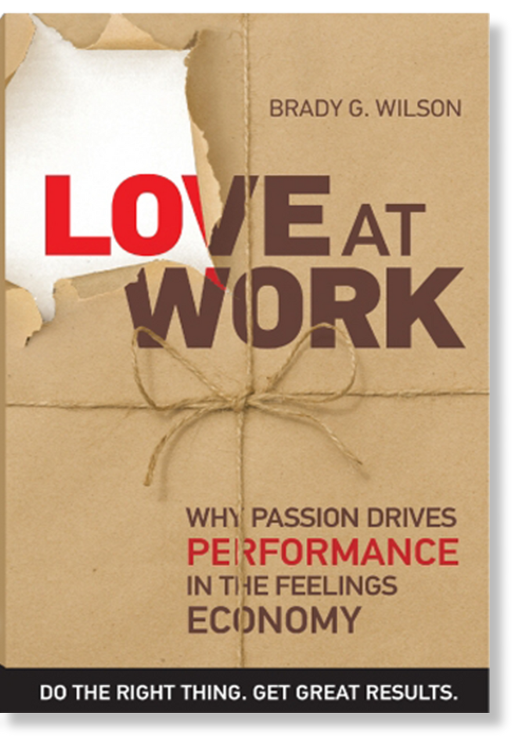
- Felt needs (when met) release emotional engagement, that elusive element that unlocks 400% more discretionary effort than rational engagement (See our book “Love at Work” for more on this.)
- Felt needs can be identified by any leader who learns how to engage in a “What matters most?” conversation. We will write more about this in an upcoming post.
- Felt needs (when met) are the payoff that enables employees to “work for free” (and feel fully alive doing so).
Why aren’t people more direct?
May 2, 20120 comments
Sharon managed a group of eleven customer service representatives. Brenda, one of the senior CSRs, worked in the department for thirty-six years. The customers loved her because she was dedicated and technically competent. Her co-workers had no use for her. She was abrupt and manipulative, exploded unpredictably and without cause.
Almost everyone on the team had asked Sharon to deal with Brenda, but she couldn’t seem to bring herself to do it. Sharon knew how sensitive Brenda was about critical feedback. Historically, trying to hold her accountable had created outbursts of tears and anger. Sharon couldn’t bear the thought of hurting her like that.
Instead, she counseled the rest of the team to overlook Brenda’s foibles and empathize with her weaknesses. Her justification to herself - “I’m sure she’ll retire within the next five or six years.”
Rather than choosing to be direct and temporarily being “uncomfortable” in addressing a sensitive and longstanding issue, Sharon chose to avoid the situation. In doing so, she also chose to pay a longer-term price. For example:
- Within the next three months, Sharon lost three excellent employees. Each of them cited Brenda as the main reason for their exit.
- The rest of the team was losing respect for Sharon. When she tried to hold them accountable, they just shrugged her off.
- Sharon’s stress level was very high and she had begun to dread coming into work.
- Brenda never received the feedback needed and therefore was never given the opportunity to change. She carried the same behavior onto her next role.
By being indirect, Sharon was holding back her truth and dodging reality, doing so at her own (and others’) peril. Avoiding reality causes a silent, invisible seepage of negative energy that pervades an environment and destroys results.
Why aren’t we more direct?
During the past twenty years, as we’ve helped individuals and organizations build their capacity for more effective conversations, our observations have led to four main reasons people are not direct:
- “I don’t want to hurt their feelings.”
- “I fear that I may be hurt in the end.”
- “I don’t want to damage our relationship.”
- “I don’t know what to do if they don’t take it well.”
Each of these fears is energized by something in our past experience that we now accept as truth. For example: When my friend Paul was growing up, every time he had an important conversation with his dad, his viewpoint was disapproved of, judged, and put down. He came to the conclusion that, “If I speak up, I will get hurt.” This became his truth, and his excuse for not being direct.
Life assumptions like these drive our behaviors in unproductive ways.
Here are two actions that can help you increase your level of “directness”?
One.The next time you walk into a situation where you need to be direct with feedback, consider preparing using these two steps:
-
Get to the root of your fears with three powerful questions. Ask yourself:
- “Why am I unwilling to be direct?” What am I afraid of?”
- “What past experiences have caused me to come to that conclusion?”
- “Are those conclusions serving me in this situation?”\
-
Assess the cost.
- “What is the cost of not being direct in this situation?”
- “How could it impact me, others and the individual?”
Two. Over the next week, track and record those situations where you sense a physical sensation (tight chest, butterflies, etc.) that is associated with a situation where you need to be direct with someone. Simply be mindful of those situations and the physical sensation associated with them can lead to improvements in your willingness to be more direct.
Next week, we’ll write about how you can be direct with your needs (rather than your opinions) and why that might be good for you, your team, your organization and your family.
The Art of De-Motivating People (and how to stop it)
Apr 24, 20120 comments
A recent article in the Washington Post “How to completely and utterly destroy an employees work life” sheds valuable insight on the impact bosses have on their direct reports’ attitudes.
The researchers analyzed the work diaries of more than 200 people over several months. In addition to learning what motivates and encourages workers, they also learned what discourages and disengages them:
“We discovered a key factor you can use to make employees miserable on the job. It is to simply keep them from making progress in meaningful work. People want to make a valuable contribution, and feel great when they make progress toward doing so.”
When people encounter interference, they can feel like they aren’t able to make a valuable contribution. Interference can be personal, interpersonal or structural. Either way, when there is too much interference and people don’t feel like they are making progress on something meaningful, work gets old, fast. Who volunteers to be unappreciated and ignored? No one – because that doesn’t emotionally engage people.
In our own research (Download the Five Drivers of Engagement), we found that work environments that don’t foster emotional engagement, forfeit extra effort, creativity, productivity, and potentially most importantly, people’s energy.
Some managers and leaders just don’t get it and they seem bent on building and maintaining their own power bases, literally “showing you who’s boss.” This type of leader sabotages employees’ projects, frequently changes goals, assumes low morale is the employees’ fault and attacks or threatens anyone who dares to suggest otherwise.
We have identified five core elements that correlate to engaged people the level of energy they have to give to their work, their families and their communities. The five areas are:
- I Fit
- I'm Clear
- I'm Supported
- I'm Valued
- I'm Inspired
The degree to which an individual can emphatically make these five statements, reveals how engaged and energized they are, and directly relates to the amount of effort and energy they can offer to their organization.
When employees have a sense of purpose, significance and security, when they feel that they belong to a group yet have the freedom to work and advance individually—that creates an environment where people are engaged and energized; one that is primed to deliver real productivity gains and outstanding results.
If you’re leading people, one of your key roles is to understand and remove interference that is getting in the way of people making progress on meaningful work.
What are you doing to remove interference?
Charitable Interpretation -The Art of Virtual Conversations
Apr 17, 20120 comments
There seems to be some debate on how much of our messages are communicated non-verbally. The range is often quoted between 60 and 93 per cent. There’s a 7% - 38% - 55% rule that circulates, saying seven per cent of our communication is based on the words, 38 percent is based on our tone and vocal cues, and 55 per cent is on our body language.
Despite the breakdown of the numbers, when you don’t go face-to-face in communication, you lose the chemical benefits we talked about in our post about sparking fascination and trust in conversations. In a phone conversation, you have the advantage of using vocal cues, but an email relies completely on the words. If the above formula is true, there is a 7 % chance of conveying what you need to, based on words alone. Add a camera to the call, and you have some of the advantages of face-to-face, but you still lack that chemical connection of being present with one another, in the same room.
Charitable Interpretation, where you interpret the other person’s meaning and intent with goodwill, and attach the most favorable perspective to their words, is a tool you can use in any conversation – virtual or otherwise.
Phone & Teleconference Conversations
•Take a few minutes at the start of your conversation for up-front connection and bonding. Be intentional and authentic, while respecting the need for others on the call, to get on with the business of the call.
•Smile. Even though the other party may not be able to see it, your smile comes through in your voice and enhances connection.
•Demonstrate respect to engage your virtual audience – give your undivided focus. Don’t give in to the urge of answering your email while the other person Is talking. Remember, hearing is more acute in a phone call and the other party may hear the tapping of a keyboard.
•Reflect implications: reflect back the essence of the speaker’s message, and the implications of what that may mean inside their world. This sends a clear signal to them that you deeply understand their message as well as where they are coming from. People tend to trust someone who understands them.
•Use word pictures and stories to intrigue the listener and help them understand your world.
Email Conversations
•Before composing an email, step into the other person’s world and ask yourself whether this is the best way to send the message, or if a phone call or a face-to-face conversation is best. If it is an emotional, personal or sensitive issue, email is not the vehicle to use.
•Consider the language that most appeal to this person. Are they technical or non-technical, formal or informal, expressive or succinct? Frame your message in the language that will make it easy for them to read and relate to.
• When you read something ambiguous in an email and it strikes you the “wrong way”, pick up the phone and ask clarifying questions with the intent of understanding, rather than being accusatory. Get curious. If it’s impossible for you to go voice to voice, then send an email asking for clarification: “I wanted to check with you on your email earlier today. Your comment on me being like ‘a dog with a bone’ could be interpreted as either admiring my perseverance or being annoyed at my stubbornness. I wanted to make sure I understood your intent. Can you say more?” Do not allow your uneasiness to go unvoiced, otherwise your heightened sensitivity may be mis-read in subsequent communication.
What has worked for you in your virtual conversations? Share your ideas here – we want to hear your suggestions!
How to stop toxic communication
Apr 12, 20120 commentsCompanies across North America are suffering from communication cancer, a toxic form of communication that destroys respect, trust, energy, and above all, performance.
In our work with business leaders, we have uncovered four of the most common causes of communication toxicity in organizations. They are:
- Indirect Communication - The use of nonverbal messages, disapproving attitudes, critical humor or public teasing to send a veiled message to someone instead of having a direct, face-to-face conversation.
- Character Assassination - Dishonoring people when they are not there to speak for themselves by assigning malice to their actions, words or motives.
- Public Redressing - Uncovering someone’s private issue in a public forum because it’s uncomfortable to go face-to-face with that person.
- e-Stabbing - Sending out a scathing e-mail and cc’ing or blind-copying those to whom you wish to "leak" juicy information or sending an e-mail to request someone’s assistance and cc’ing his or her supervisor so the person is forced to comply.
Take these examples:
- At a national sales conference, a CEO unexpectedly and publicly dresses down his corporate sales team for not meeting its sales targets — figures that the CEO had devised and given to the sales force without its input.
- Employees at a growing start-up firm enjoy an innovative work culture filled with office friendships. The atmosphere quickly devolves when candid feedback is suppressed in order to preserve friendships. It’s replaced by widespread complaining, discontent and passive-aggressive behavior behind each other’s backs.
- A CEO sends out a holiday policy change that varies for each employee level of the organization. Senior executives get a specific holiday off with pay, while middle managers can take a day off in lieu, and administrative support will be docked the day's pay. The policy is communicated in a single e-mail sent to all the organization’s 5,000 employees.
If you’re ready step into the journey of stopping “toxic communication” at work, at home or in your community, we recommend these four actions:
- Use direct communication and avoid sending messages (email) that might leave ambiguity in the mind of the receiver. Practice “XYZ” communication: “When you do X, it makes me feel Y. Could I ask you to do Z instead?”
- Shut down character assassinations. To avoid becoming a character assassin, use this simple rule: While speaking about someone to others, picture them beside you and only say the things you would say if they were present. If you are a victim of toxic communication, invest in a direct, face-to-face conversation with the person who started the toxic message and those infected.
- Interrupt public redressing. If you are a manager, don’t discipline people in front of their peers unless the issue absolutely must be addressed publicly, in the moment, to avert a greater disaster.
- Go face-to-face with e-stabbers. Help them understand the implications of using technology as a fault-broadcaster, a power-lever or a rear-covering device. One or two face-to-face conversations with a person like that will provide a healthy disincentive.
By removing the toxic communication from your workplace, you create the space for healthier and more productive dialogue that leads to higher levels of energy and more performance.
What other types of toxic communication do you see in your organization?
Connect, Trust and Spark Fascination through Conversation
Apr 10, 20120 commentsIn last week’s blog post, Are you spreading optimism or pessimism, we discussed how emotions can be contagious. This week, we’d like to explain how you can create connections, increase trust and spark fascination in your conversations.
The Connection Contagion

Great leaders understand the powerful secret of human connection. They spend time interacting with employees, showing interest in them as a person (versus treating them like corporate chattel), listening to them, and thanking them face-to-face for their contribution. When you need to convey optimism, passion, purpose, gratitude or seriousness, the most effective way to do it is face-to-face. The limbic system in your brain regulates emotions, and sends out a wavelength in face-to-face conversations that act as a contagion to imprint others with passion and it can powerfully serve an entire organization. If you need to deliver excitement and enthusiasm, or perhaps compassion and kindness, along with your words, consider a face-to-face conversation as your default, if possible.
Create Trust / Reduce Tension
Face-to-face conversation is essential if you need to create trust and reduce tension in a relationship. It increases trust, bonding, attention, and pleasure, and it reduces fear and worry. As Edward Halowell puts it in his Harvard Business Review article called The Human Moment at Work:
“Nature … equips us with hormones that promote trust and bonding: oxytocin and vasopressin. Most abundant in nursing mothers, these hormones are always present to some degree in all of us, but they rise when we feel empathy for another person – in particular when we are meeting with someone face to face. It has been shown that these bonding hormones are at suppressed levels when people are physically separate.”
That explains why it’s easier to rip someone apart in an email than it would be if you were standing in front of them. But face-to-face conversation not only produces trust, it can be the happy Prozac moment of your day. Hallowell adds that “scientists hypothesize that in-person contact stimulates two important neurotransmitters: dopamine, which enhances attention and pleasure, and serotonin, which reduces fear and worry.”
Spark Fascination
Have you ever had a conversation with an “expert” who is explaining something that is intricate and complex, but you find yourself fully capable of comprehending what is being said? It’s as if all your channels are open - no distorted buzzing in the background. In another conversation, a different expert is explaining a subject that is no more complex but you feel thick and slow, unable to comprehend the message.
What was the difference? Sometimes it’s more than just your affinity with the subject matter or how ‘with it’ you felt on a given day. Often, chemistry can be at play. Perhaps the first speaker made you feel respected and valued. The second made you feel patronized and disrespected. Each of these two interactions sets into motion a very different hormonal chain of events.
Daniel Goleman, in Working with Emotional Intelligence,discusses the scientific evidence regarding the physical effects on people when they are disrespected or respected. “When we experience stress -- for example, when we’re being psychologically “erased” or simply ignored by others -- our bodies release cortisol, sometimes called the stress hormone. When cortisol is released into our pre-frontal cortex, the logic center or CPU of our brains, can shut down up to sixty-six percent of our rational reasoning powers. The unhappy effect is that we find it hard to understand what is being said. We literally remain stupid, no matter how hard we try to understand.”
He adds that whensomeone positively engages us, “our brain is being soaked in a bath of catecholamines and other substances triggered by the adrenal system. These chemicals prime the brain to stay attentive and interested, even fascinated, and energized for an almost effortless, sustained effort.”
If you want to make a deep and lasting imprint on people, make them feel respected and valued as you converse with them. Doing so will enable them to find the fascination that keeps them engaged to the point of full understanding.
This post discusses face-to-face conversation as the ideal default mode when communicating, to take advantage of your body’s natural chemicals to engage in a better connection. Next week will introduce reality, and talk about how to be more effective at having better conversations virtually and electronically.
Are you spreading optimism or pessimism?
Apr 2, 20120 comments
Imagine a good friend telling you about a pill she takes every morning that produces amazing results for her in the area of her interpersonal relationships. This is a friend who used to have difficulty connecting with people. Now, she establishes an easy rapport within minutes. Building trust with people had always been difficult for her, but now people offer their trust, information and commitment spontaneously. People used to tune out when she talked. Now her conversations fascinate her listeners.
Do such wonder drugs exist? Yes, but not in tablet form, they’re stored inside you. All of us come equipped with hormones that, when triggered and released, have a remarkable effect on our ability to connect, create trust and fascinate people. These hormones produce a relational chemistry we have with some people and completely miss with others.
Let’s explore the simple science of how human beings ‘synch’ with each other. The limbic system of your brain (the emotional center) is an open-loop system, meaning emotions can be contagious. Someone’s tears, or their smile can trigger an involuntary sympathetic reaction in you.
In their book Primal Leadership, Goleman, Boyatzis, and McKee discuss this open-loop phenomenon and describe how emotions spread between people.They cite studies in which scientists measure the heart rate of two people as they have a good conversation. At the beginning of the conversation, their bodies are functioning at different rhythms, but fifteen minutes later their physiological profiles look remarkably similar – a phenomenon called mirroring.
Scientists describe [the limbic loop] as “interpersonal limbic regulation,” whereby one person transmits signals that can alter hormone levels, cardiovascular function, sleep rhythms, and even immune function inside the body of another…The open-loop design of the limbic system means that other people can change our very physiology – and so our emotions.
Put us together in face-to-face conversations and we regulate one another’s emotions. You’ve probably experienced this yourself. One team member’s strong, buoyant mood affects one person after another until the whole team is feeling upbeat. Another member’s critical, negative mood can equally infect an entire team in destructive ways. These authors go on to say:
This circuitry also attunes our own biology to the dominant range of feelings of the person we are with, so that our emotional states tend to converge. One term scientist’s use for this neural attunement is limbic resonance, ‘a symphony of mutual exchange and internal adaptation’ whereby two people harmonize their emotional state.
Recent discoveries in neuroscience confirm there are steps you can take to increase your chemistry in the relationships that are most important to you. In the coming weeks we’ll share how you can create connections, increase trust and spark fascination in your conversations – both face-to-face and virtually.
Love Lives in the Tension
Jul 12, 20110 commentsRelationship Rule #1 states that, in any relationship you will encounter differences. Men and women’s communication styles are very different. South Americans have a different sense of timeliness than North Americans. Operations people tend to value processes differently than sales people. Millennials appreciate technology differently than Boomers do. An introvert views a company party very differently than an extrovert does.
And differences tend to create a sense of tension. The beauty of tension is that it has something powerful residing within it – energy. You don’t get to decide whether energy will get released from the tension – you do get to decide whether it will be intelligent energy or destructive energy.
At work, we deal with business tensions every day:
- Meet the global needs of the organization and meet the individual needs of the employee.
- Achieve economic and ecological success.
- Do what’s good for the present and for the future.
- Provide a differentiated, tailor-made customer experience and reduce costs.
- Use technology to drive efficiency and help employees feel that face-to-face connection.
- Develop peoples’ careers and maximize productivity.
Great leaders stand right in the middle of the tension, use the power of the and, harmonize the conflicting needs and in so doing, release a powerful energy that drives sustainable results.
I’m beginning to think that in relationships, love lives right in the middle of the tension. My partner Theresa and I have been together for twenty-nine years. I started off the relationship swallowing my needs, overlooking issues and stuffing my frustrations in an attempt to meet Theresa’s needs. That didn’t work. It created bitterness and resentment. I wasn’t loving myself. Then I tried to make sure I got my own needs met. That didn’t work either. It created a pendulum of fiery explosions and icy wildernesses. I wasn’t loving Theresa.
Love lives in the tension. It’s the drive to get your own needs met and the drive to ensure your partner’s needs get met. Love both covers our partner’s inadequacies and calls out their bad behavior. Love accommodates and demands growth.
When two people stand right in the middle of their relational tensions and extend themselves to invest in their own highest good and highest good of the other, astonishing energy is released.
Love Makes you Strong
Jul 5, 20110 comments
Want your quads, calves or biceps to grow? Here’s how to make it happen. First you exert yourself to the point of tearing the micro-fibers of your muscles. Next you rest your muscles. In the next couple of days, as the torn fibers repair themselves muscle is built. This is the cycle that creates the growth of muscles: stress and recovery, stress and recovery.*
Extending yourself tears the muscles
Last week my eldest son Adrian and his wife Alison had a triple whammy. They moved into a different house on Saturday, had a baby on Sunday and renovated their entire bathroom in the ensuing week. I had just come off a big month of travel and was exhausted. But I really wanted to invest in the highest good of my kids. Adrian and I gutted the bathroom, re-plumbed it and got the drywall all taped. I worked late into the night with him then woke up at 4:30 the next morning to take off on another trip. I knew when I woke up that my body was sick. Sometimes when you extend yourself to invest in someone’s highest good it requires sacrifice – you tear something in the process. I later told my business partner Alex, “I wouldn’t trade this cold for anything. It means everything for me to be there for Adrian.”
I have stepped into many, many stressful conversations – extending myself to invest in someone’s highest good. In the process I often exerted my intellectual or emotional muscles to the point where they began to tear. In the aftermath I became enlarged – a bigger, more expansive human being.
My scope of care and ownership expanded and I became more mature, no longer just caring for my own good and growth but the good and growth of those closest to me, and then in an ever-expanding orbit – my community, my province, my nation – my world.
Are you tearing the muscles?
Is there someone you need to offer your help to – something that will mean significant personal sacrifice for you?
Is there someone close to you who needs to move to a higher level of growth or maturity and you’re the one who needs to have a conversation with them?
Is there someone with an annoying idiosyncrasy requiring levels of patience and restraint from you, that are almost more than you can bear?
*For more on this concept read The Power of Full Engagement by Jim Lohr and Tony Schwartz.
Love is Your Selection Process
Jun 30, 20110 comments
If it’s true that the soul’s stature is measured by the yardstick of love, you might be asking yourself, “How do I stack up in the love department? Am I a loving person?” I have an answer for you: you are a loving person. You love all sorts of things. Whenever you extend yourself to invest in the highest good of someone or something – that’s love.
I often extend myself to invest in the highest good of my customers. So by the definition above, I love my customers.
My neighbor Jim extends himself to invest in the highest good of his Harley. He loves his motor cycle. Kelly extends herself to invest in marathon training. She loves running.
Love is the selection process that determines what you will do and what you will not do; what you value and what you throw away; what you seek after and what you spurn; what you will devote your time to, and what you will ignore. The question is not: “How can I be a more loving person?” You are already a loving person. You love all sorts of things. The question is: “How can I love the things that are most important and beneficial?”
Your marriage suffers when your spouse feels you love yourself more than you love them. Your family suffers when your kids feel you love your career more than you love them. Your business suffers when your customers feel you love your processes more than you love serving them. We do love. The question is: “What do we love?” and “How do we know what’s best to love in the moment?”
The answer is not as simple as, “Don’t love things – love people.” You do love your old Gibson hummingbird guitar, and if my definition for love holds any water you should. By all means extend yourself to invest in its highest good: polish it, store it at the proper humidity level so it doesn’t crack and don’t let your four-year-old shred it with a bread tag.
But if you don’t know when to put your Gibson down and listen to your wife’s concerns about the colleague who’s trying to assassinate her character at work, then she’s going to feel you love your Gibson more than you love her. That will not be good for your marriage. If you go ballistic when your teenager spills hot chocolate in your SUV, he might not have a huge desire to hang with you.
I remember helping a friend move. The ramp of the moving truck was very slick and I slipped and hurt myself. My friend came running over and immediately expressed his concern – for his dresser. He began running his hands over the wood to determine if any damage had been done. The message seemed articulate: “I love my furniture more than I love you.”
I think in general, loving people enlarges our soul more than loving things. Perhaps that’s because people are harder to love than things. They seem to require a greater extending of ourselves and a steeper form of investment. Extending yourself to invest in your cottage has a pretty linear form of payback to it. The relationship between cause and effect is trickier to track when you invest in people.
So love things, love ideals and love people. Most of all, learn to detect what the moment is calling for and focus all your attention on loving that in the moment.
Love Makes You Big
May 31, 20110 commentsTears welled up in Shelly’s eyes as she told me about her boss’ sacrifice. Shelly was stuck in a no-win situation. She managed a highly-complex nursing unit with too few resources, too many demands and too much emotional energy being sucked out of her by a chronic bullying issue.
Kate, my boss came to me and said, ‘I’m carrying your pager for the next six weeks while you get things straightened out. I’ll let you know what you need to respond to and I’ll take care of the rest. What kind of a boss does something like that?!”
In short, only big people do things like that. Scott Peck unpacks the concept of human enlargement in The Road Less Traveled*. Psychologists say that when “we are attracted to, invest in and commit to an object outside ourselves 'we actually cathect it' We psychologically incorporate a representation of that object into ourselves.' In the process of cathexis, we extend the boundaries of our personhood by stretching out toward the object of our love whose growth we wish to nurture.”
My neighbor Mary-Catherine is a gardener who loves her garden. When she’s at work and takes a break for lunch she pulls out her Lee Valley catalogue and studies the gardening section. On rainy days she’s creating sketches of how she envisions her garden to be. In a very real way, Mary-Catherine has incorporated the garden within her, and by this incorporation her self has become enlarged. She is not only Mary-Catherine anymore, she is Mary-Catherine with a garden growing inside her.
Those of us who are parents have experienced this first-hand. I am not only a person, I am a person with children and grandchildren living inside me. Through cathexis - being attracted to, investing in and committing to the objects of my love I have become a bigger person. In short, love has made me big.
If love enlarges us, think how large Mother Theresa’s soul was. She cathected thousands inside of her. Think how small the soul of a cold, heartless banker who only lives for his own self interests.
I’ve been on a quest to discover a working definition for love. I think maybe there’s one inside this concept of cathexis. My current working definition for love is extending yourself to invest in someone’s highest good.
So back to Shelly’s question, “What kind of a boss carries her employee’s pager for six weeks?” A boss who is attracted to, invested in and committed to the highest good of her employees. In short, a boss with employees living inside of her. It’s only a big person who makes a big boss.
How big are you on the inside? What, or whom do you have living inside of you? If you extend yourself to invest in the highest good of your employees, it is possible that one of them is speaking positively about you right now and asking, “What kind of a boss does something like that?”
*If you haven’t yet read it, pick up Scott Peck’s book The Road Less Traveled. His thoughts on cathexis are on page 52-53 of Love at Work.
Got a Soul?
May 26, 20110 comments
A chunk of limestone does not seek the growth of another being. Neither does a turnip. As far as we can tell, minerals and vegetables have no drive to seek the growth and preservation of others. The cocker spaniel, on the other hand, does exhibit this drive. She cares for and protects beings outside her own scope of concern. Humans take this trait to even more sophisticated levels.
If you were asked, “Does a rock have a soul? Does a turnip? A cocker spaniel? A human?”, what would you say?
Mihalyi Csikzentmahalyi, the author of the book Flow, has an opinion on this. “No matter how complex a system is, we judge it as having no soul if all its energies are devoted merely to keeping itself alive and growing. We attribute soul to those entities that use some portion of their energy not only for their own sake but to make contact with other beings and care for them.”
With this thought in mind, one could argue that the cocker spaniel has a bigger soul than the heartless lawyer who devotes all his energies to serving himself.
The bigger the soul – the more it seeks to extend itself to invest in the highest good of another. In short, the soul’s stature is measured by the yardstick of love.
In a very real sense, love is the metric of maturity. Got a soul? How big is it? You can tell by the amount of energy you expend seeking the highest good of others – the drive to seek the growth and preservation of an ever-broadening community. This journey of maturity started when you began to share toys with other toddlers. It continued with your friends as you protected them in the schoolyard. It progressed when you protected a colleague’s reputation at work. Perhaps you’ll get married and have children. That part of the journey will give you millions of opportunities to grow your soul. The journey includes all your dealings with your community, and your entire world.
Here’s my definition for love at this point in my journey: Love is extending yourself to invest in someone’s highest good.
Breaking apart this definition will provide you with a choicepoint many times a day: Will I extend myself? This can mean sacrifice, stress, stretching and pain. To invest. This part requires risk. You take time, energy or money that’s in your hand as a for sure thing and you spend it on someone else in the hopes that good will come out of the investment. In someone’s highest good. This part requires relationship and conversation. A person’s highest good is not tattooed on their forehead. Not only that, most people aren’t crystal clear themselves, about what the highest good is for them. We all have blindspots and are a little bit unaware of what’s best for us. This is a discovery process: seeking to co-explore what someone’s true potential is and how you can help them fulfill it.
Animal, vegetable, mineral – the choice is yours every day.
Engagement Should Be Close to the Heart
Apr 4, 20110 comments
I just returned from China. Here's how it came about. Over the past few years my 22 year old daughter Katelyn has been poking me in the ribs saying, "You go on so many trips - when are you going to take ME on a trip?" I've been looking for the right opportunity for some time. It presented itself through Katelyn's boyfriend Josh, who is teaching at a University in Hunan Province. Katy wanted to go and visit him but didn't feel comfortable navigating China by herself. I didn't have to be asked twice. We started planning our trip and got excited about hanging out together.
That's when I got the email from Josh. "I was wondering if you could transport something over to China for me?" It turns out what he wanted transported was an engagement ring - he was asking for my daughter's hand in marriage. So I began thinking about how I was going to transport the 'rock'. I didn't want to put it in my checked luggage: I'd feel horrible if it got removed. I didn't want to put it in my carry-on luggage: what if the security people asked me to open it up and Katy saw the ring. So I decided to wear the ring around my neck on a strong leather cord: people go through the security scanners with diamond rings all the time and they don't go off. I should be safe.
Well, I got through security with no problems. A few hours later I was sitting beside Katelyn on the plane, the ring that would change her future a mere 16 inches from her eyes and she had no clue. Sweet. I did have to be careful though. I had this compulsion to keep touching it beneath my turtleneck - is it still there I wonder? A few days later, after I delivered the ring safe and sound to Josh I began reflecting on the experience.
You know, engagement should be close to the heart. It should be something we carry on behalf of others. It should be something we safeguard. And it should be something we deliver for the people we serve. Doing so is love at work. And I can promise you one thing, making engagement happen won't cost you nearly as much as it's going to cost me!
Cheers, Brady.
Uncomfortable Conversations
Nov 2, 20100 comments“I believe that success can be measured in the number of uncomfortable conversations you’re willing to have.” – Timothy Ferriss
I’d have to agree with Tim Ferriss. My definition of love is “extending yourself to invest in someone’s highest good” and uncomfortable conversations are just the type of extension that demand a big investment; one that a small percentage of people are willing to make.
The unsuccessful managers is caught up with his email. He attends the meetings he is required to attend. His reports are all completed. What’s the one activity he has left undone? Uncomfortable conversations.
- He hasn’t got around to taking to his boss about how her mass email made employees feel de-valued.
- He hasn’t talked to the marketing manager about the way he shoots down others’ ideas in meetings.
- He hasn’t dealt with the under-performer: the one who is rocking the numbers but trashing his team-mates.
The risk and discomfort involved can be paralyzing. Today (and most every day) I’m out helping people extend themselves to become skillful in those types of conversations. It’s a large privilege to help people figure out how to Love at Work.
Date with my Granddaughter
Oct 21, 20100 commentsTomorrow I go on a date with my granddaughter. As I interact with her, I often think, “What kind of a world will you grow up in?”
What if she could experience an education system that identifies her unique potentialities and helps her cultivate them so she can contribute to society in an ever-expanding way.
Maybe because of that education system she’ll be part of the team of engineers and researchers that discovers a, clean, alternate form of energy to power our autos, homes and businesses.
Maybe she’ll design a breakthrough negotiation technology that will end the bloodshed in the Gaza strip.
Or perhaps she’ll help transform our penal system to produce contributing members of society.
Maybe she’ll be an economist and use her economic brilliance to end poverty.
Maybe, twenty years from now, she’ll come out on another date with me and say, “Grandpa, I can’t believe that people in your generation used to call people ‘Human Resources’. Why did they treat them like resources, Grandpa? Didn’t they know they were people?”
My hope is that she won’t have to ask that question. Maybe, just maybe, I’ll be able to tell her that because of my work people began to Love at Work – extending themselves to invest in each other’s highest good. I want to build a better world. Maybe I’ll let my granddaughter know that tomorrow.
Joy,
Brady
Build a Better World
Oct 12, 20100 commentsI just attended a Restorative Justice conference in Rochester. You may not yet be aware that there are pockets of the world where people are approaching justice in a way that actually restores the aggrieved, the offender and the broader community impacted by the crime.
Restorative Justice goes far beyond punitive and retributive justice (our North American justice system) and even beyond ‘repair-ative’ justice. This system, pioneered by Dominic Barter in the ghettos of Brazil, has had a transformative impact on gang wars, prison violence, schools and youth drug addiction.
Restorative Justice engages the offended, the offender and the larger community in a form of dialogue that is strikingly authentic and powerfully transformative. I am intrigued about this phenomenon for one simple reason, and it’s the reason I wrote Love at Work: I want to build a better world. Restorative justice is a great example of how that happens. Let me use a metaphor to unpack this idea.
Think of a raging river, roaring and foaming its way downstream. Does it have power? Yes, immense power. But it’s not a particularly useful form of power. If we were to be able to install a dam and a turbine, we could transform all that power into useful energy – the kind of energy that could power a hospital or a university.
Restorative Justice does the same thing – it places itself right in the middle of the stream of hatred, bitterness and vengeance and installs a system that transforms all that destructive energy into something useful – the kinds of actions that restore people and allow them to become or return to the place of contributing to society.
Love at work is all about that very activity – stepping into our business tensions and extending ourselves to invest in another’s highest good. When we practice that at work, we learn how to do it more effectively for our communities and ultimately, for our planet. That builds a better world.
Love = Intelligent Listening
Oct 12, 20100 commentsI heard Dominic Barter (the Restorative Justice guy from my last post) say something interesting about the word intelligent. He told us what the word actually means. Do you know what the word intelligent means? Smart? Wise? Knowledgable? Bright?
It comes from the word intelligere and is comprised of two parts: inter + legere. Inter = between and legere = read or choose. Intelligence is the ability to read between the lines. Anybody can read what’s on the lines – it’s the intelligent person who can extrapolate and read between the lines – connecting the dots to uncover the hidden meaning.
So intelligent listening is the ability to read between the lines – bringing a blend of intense interest and refreshing directness that pulls out the deepest meaning possible in any situation.
Intelligent Listening is one of the most demanding expressions of love- demanding not only immense psychological effort but a transparent authenticity that is just unfake-able. I’m passionate about helping leaders learn to be intelligent listeners because intelligent listening releases emotional engagement – the magnetic element that unlocks four times the discretionary effort of rational engagement.
Walk into your next conversation with the curiosity that will enable you to read between the lines – then do the implication reflection – reflecting back to the the speaker what their words might mean to them – inside their world. Demonstrating this level of understanding in conversation distunguishes you as an intelligent listener.
Manitoulin
Oct 1, 20100 comments
I can’t believe it’s been two years since I started to write down my thoughts about Love at Work in my journal. I was at my cottage on Manitoulin Island. (my native friends tell me that Manitoulin Island means ”The Home of the Great White Spirit”) Each morning, as I sat overlooking Tobacco Lake, a flood of ideas and impressions presented themselves to me. I remember writing, “Why would I write a book about love in the workplace? People will think I’m a nutcase.”
Well, Love at Work landed on Amazon.com this June and the initial response from readers has indicated that I might not be too far gone – in fact, for several people, the notion of practicing love at work came just on time – confirming what they knew in their gut and practiced in their leadership style all along: 1. Love creates feelings 2. Feelings release energy 3. Energy produces results.
It is so intriguing to look at the pages in my journal now – two years later, and see how the thoughts I wrote on the page, which seemed so amorphous then – have morphed into something solid and useful for people in the midst of their very real and challenging work-life tensions. How appropriate that a timely and useful message would be sparked in the home of the Great White Spirit!